Modern cities are growing vertically. Across the Middle East and other rapidly developing regions, high-rise buildings have become symbols of progress and architectural innovation. From commercial towers and residential skyscrapers to luxury hotels and mixed-use developments, maintaining these tall structures requires specialized solutions. Traditional scaffolding and heavy lifting equipment are no longer always practical. This is where rope access services play a critical role in modern facility management.
Rope access is not just about working at height. It is a highly skilled, safety-focused method that allows technicians to perform inspections, repairs, and cleaning efficiently while minimizing disruption.
What Are Rope Access Services?
Rope access is a safe working-at-height technique that uses ropes, harnesses, anchors, and specialized equipment to access difficult-to-reach areas of buildings. The method was originally developed for industrial and offshore environments but has now become widely used in commercial and residential building maintenance.
Unlike scaffolding or cranes, rope access systems are lightweight, flexible, and quick to install. Technicians are professionally trained and certified to perform tasks while suspended safely from secure anchor points. This makes rope access an efficient and practical solution for high-rise maintenance projects.
Common Applications in High-Rise Buildings
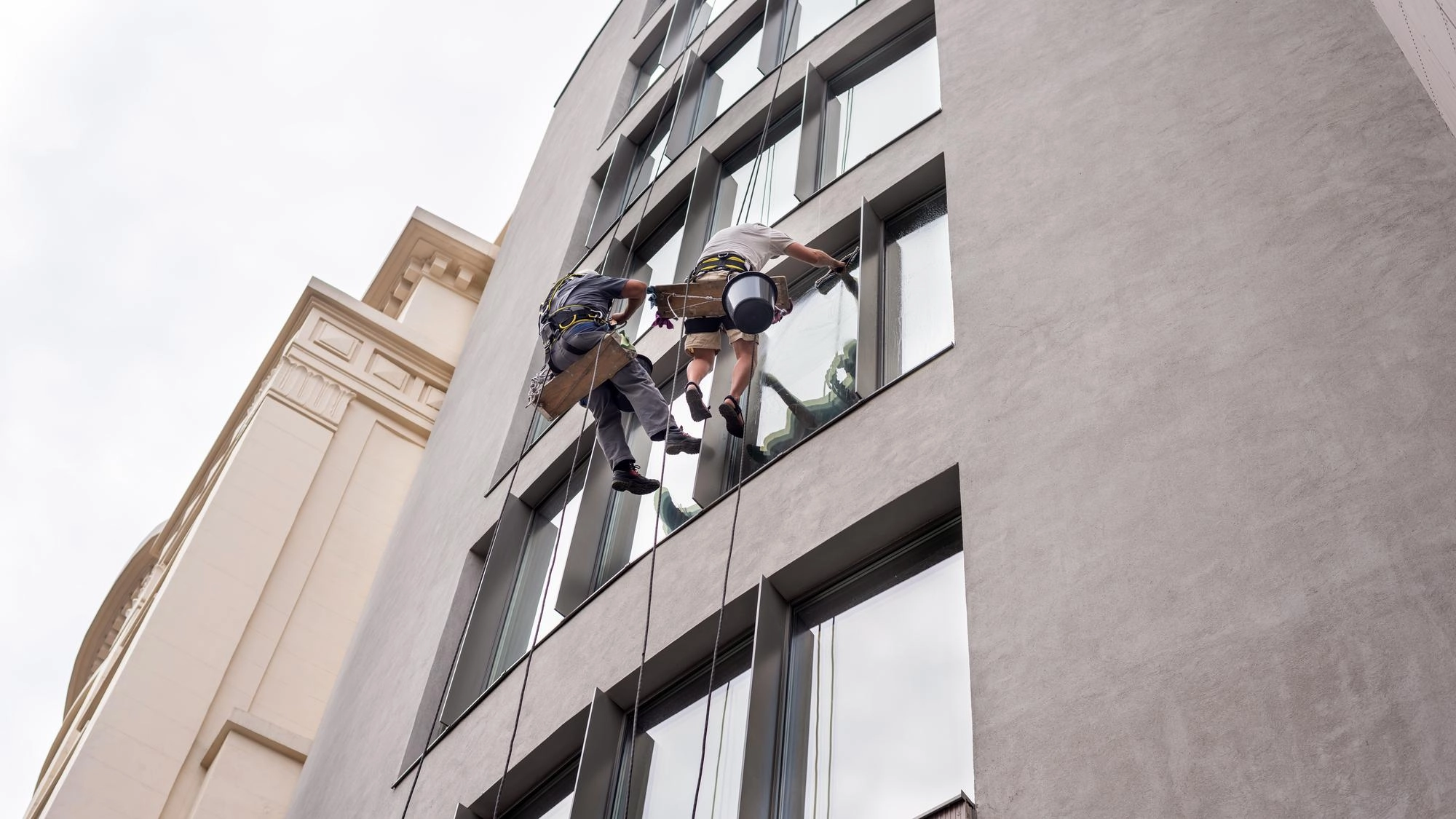
Rope access services are used for a wide range of building maintenance tasks. One of the most common applications is facade cleaning, especially glass and curtain wall systems. High-rise buildings with large glass surfaces require regular cleaning to maintain their appearance and allow natural light to enter.
In addition to cleaning, rope access technicians perform facade inspections to identify cracks, sealant failures, or structural issues. They also handle minor repairs, glass replacement, waterproofing work, painting, and cladding maintenance. In many cases, rope access is the safest and most cost-effective way to carry out these tasks without disrupting building occupants.
Cost-Effective Alternative to Scaffolding
One of the biggest advantages of rope access services is cost efficiency. Traditional scaffolding requires extensive setup time, material costs, labor, and permits. It can also obstruct entrances, walkways, and surrounding areas. For high-rise buildings, the cost of installing scaffolding across multiple floors can be extremely high.
Rope access eliminates most of these expenses. Since the setup is minimal and flexible, projects can begin quickly and finish faster. There is no need for heavy equipment or large ground space. This makes rope access particularly beneficial in busy commercial districts where space is limited and minimizing disruption is essential.
Faster Project Completion
Time is a critical factor in facility management. Building owners and tenants prefer maintenance work that causes minimal inconvenience. Rope access allows technicians to move vertically and horizontally with ease, reaching targeted areas directly without dismantling structures.
Because there is less setup and dismantling involved, projects are often completed much faster than traditional methods. This reduces downtime and ensures that normal building operations continue smoothly.
Safety Standards and Professional Training
Safety is always a top priority when working at height. Professional rope access technicians undergo rigorous training and certification programs. They are trained in rescue procedures, risk assessment, and equipment inspection. Every project begins with a detailed safety plan to identify potential hazards and implement control measures.
Modern rope access systems are designed with multiple safety redundancies, including backup ropes and secure anchoring systems. When handled by experienced professionals, rope access is considered one of the safest methods for high-rise maintenance.
Ideal for Complex Architectural Designs
Contemporary buildings often feature complex architectural designs, curved facades, and irregular structures. These designs may be difficult to access using conventional equipment. Rope access provides the flexibility needed to navigate unique building shapes and reach confined spaces.
For buildings with architectural features such as domes, overhangs, and decorative facades, rope access technicians can perform precise work without damaging the structure. This adaptability makes it an ideal solution for modern urban landscapes.
Supporting Preventive Maintenance Strategies
Rope access services are not only for reactive repairs. They play an important role in preventive maintenance. Regular facade inspections help detect minor cracks, sealant deterioration, and water leakage points before they become serious structural issues.
Early detection prevents costly repairs and protects the building’s long-term value. Preventive rope access inspections also support compliance with safety regulations and building management standards. This proactive approach aligns perfectly with integrated facility management strategies.
Minimal Environmental Impact
Compared to heavy machinery and scaffolding systems, rope access has a smaller environmental footprint. There is less material usage, reduced fuel consumption from machinery, and minimal disturbance to surrounding areas. This supports sustainability goals and helps organizations maintain environmentally responsible operations.
For companies focused on green building practices and corporate social responsibility, rope access offers a practical and eco-friendly maintenance option.
Applications Across Industries
Rope access services are widely used across various industries. In commercial office towers, they support facade cleaning and glass replacement. In residential high-rises, they ensure balcony repairs and waterproofing maintenance. Hotels and hospitality properties rely on rope access to maintain exterior aesthetics and guest safety.
Industrial facilities and infrastructure projects also use rope access for structural inspections, painting, and maintenance of difficult-to-reach areas. The versatility of this method makes it a valuable asset in both urban and industrial environments.
Enhancing Property Value and Brand Image
The exterior appearance of a building directly influences its value and reputation. Clean, well-maintained facades reflect professionalism and attention to detail. Regular rope access maintenance keeps buildings looking modern and presentable.
For commercial property owners, this enhances tenant satisfaction and market competitiveness. For residential developments, it supports higher property values and long-term structural integrity.
Final Thoughts
As cities continue to grow vertically, maintaining high-rise buildings requires innovative and efficient solutions. Rope access services provide a safe, cost-effective, and flexible method for managing exterior maintenance and inspections. From facade cleaning and minor repairs to preventive inspections and complex structural work, rope access plays a vital role in modern facility management.
Organizations that invest in professional rope access solutions benefit from faster project completion, lower operational costs, enhanced safety standards, and improved property value. In today’s competitive real estate and infrastructure landscape, rope access is not just an option, it is an essential component of smart high-rise maintenance strategies.